3D scanning and modeling
We scan objects, environments and people, with lasers or photogrammetry, then process them into 3D models. Effigy has been creating digital doubles (digital twins, digital humans...) for 10 years, for integration into 3D production workflows as meshes or as Gaussian Splatting.
The photogrammetry rig / instant scan of a person
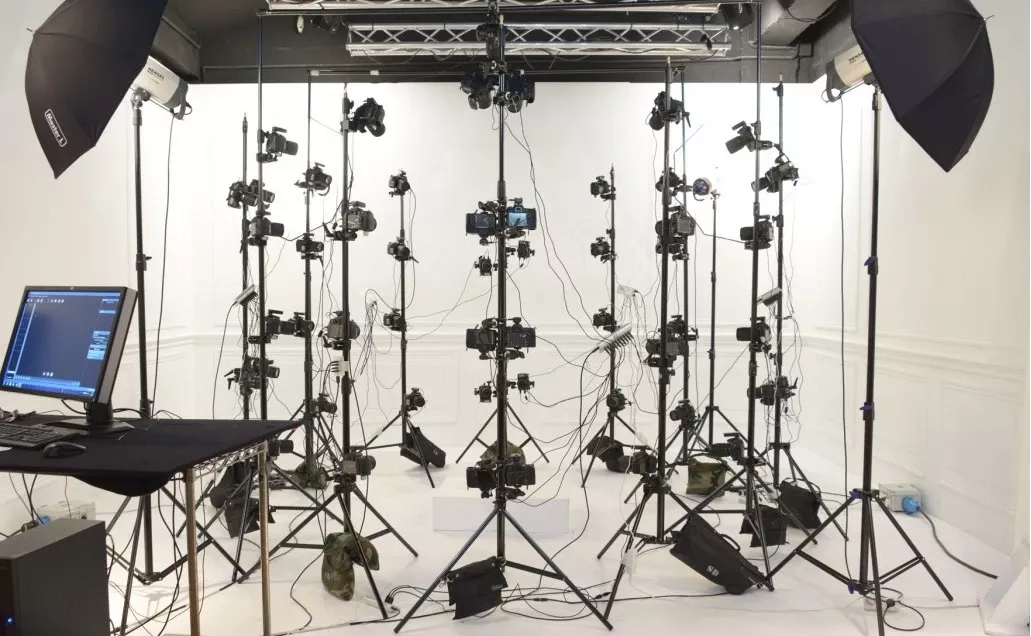
| cameras | 60 synchronized cameras6000 x 4000 source images |
|---|---|
| Lighting | Pro flash photogrammetryfor a truly sharp, accurate scan, without shadows |
| Subjects | Ideal for digitizing people or animalsin the blink of an eye = high productivity |
| People | Two configurations: body and faceWe optimize the 3D scan of a person with 60 images for the body and 36 additional images for the face |
| Mobility | The system can be transported, in France or abroadThe photogrammetry rig is modular and fits in a 25 m² room, for operations requiring several 3D scans on location. |
From scan to 3D model
Photogrammetry scanning of characters
Exact proportions, natural poses (even captured in motion) and high-quality color textures (8K color maps): multi-camera photogrammetry is the best tool for scanning living subjects.
3D modeling
Digital sculpting and retouching, retopology, modeling, texture work and optimization, grooming, rigging... our 3D artists master the entire 3D asset production pipeline.
Different 3D modeling methods
Objects, environments or people, with LiDAR and/or photogrammetry, combining meshes and splats, at true scale, to create a model for printing or for an XR application... we have the expertise to find the method best suited to your specifications.
Gaussian Splatting
The photogrammetry rig also produces source images for creating Gaussian Splatting assets; this delivers a photorealistic result with almost no retouching, a revolution in 3D modeling!
3D avatars: which style do you prefer?
Photorealistic avatars
Digital doubles of celebrities, athletes and actors for film, advertising and 3D, VR and AR applications, thanks to our scanning systems and a team of seasoned 3D artists. Effigy has scanned and built avatars of several hundred people since the studio was founded.
Stylized avatars
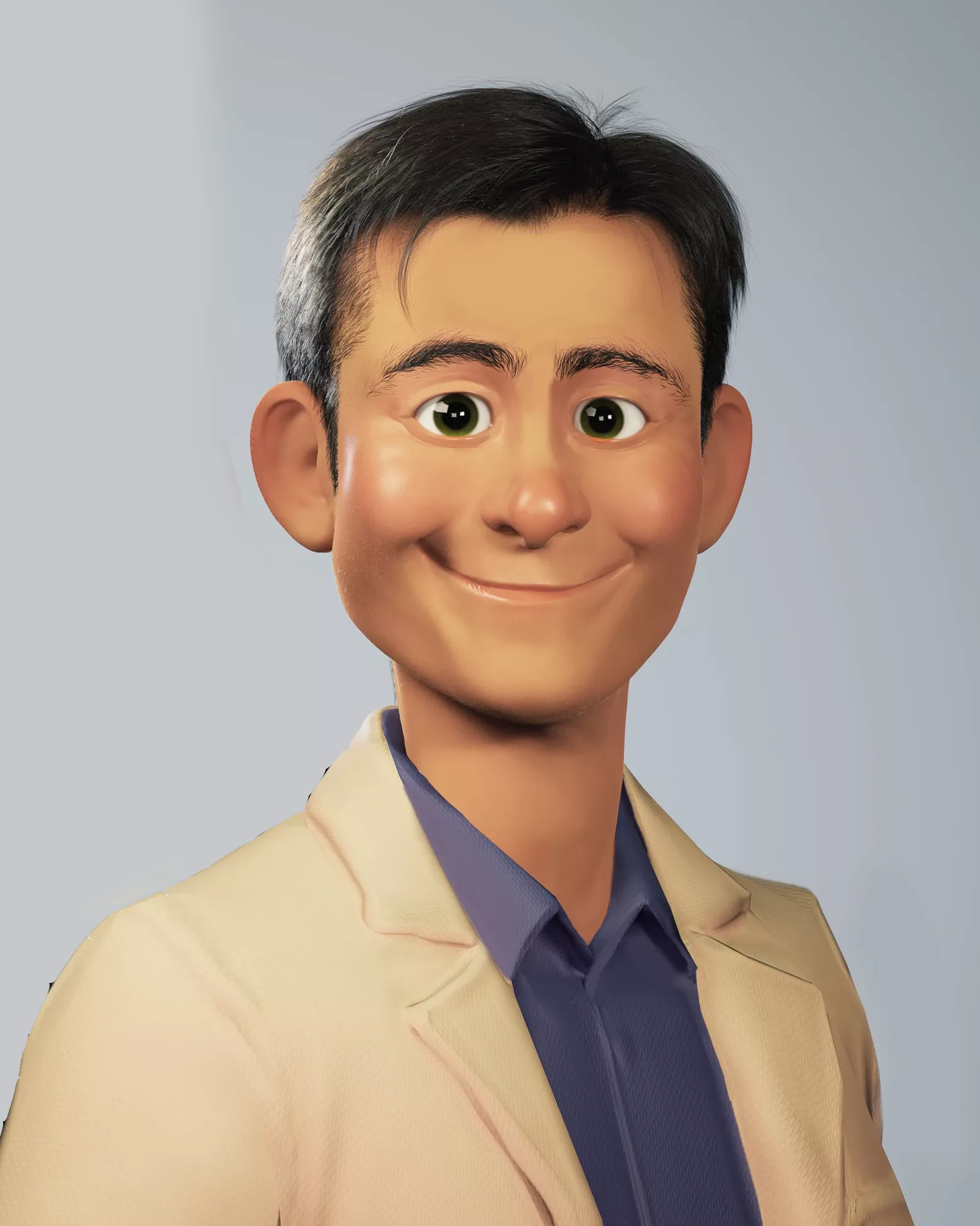
“Cartoon” characters, mascots, video game characters or models optimized for virtual reality... We usually start from a real scan of the person, then rework their avatar through digital sculpting in a “Fortnite” style, for example...
Another option: move away from reality entirely and create anthropomorphic characters, ready to animate
The 3D production workflow
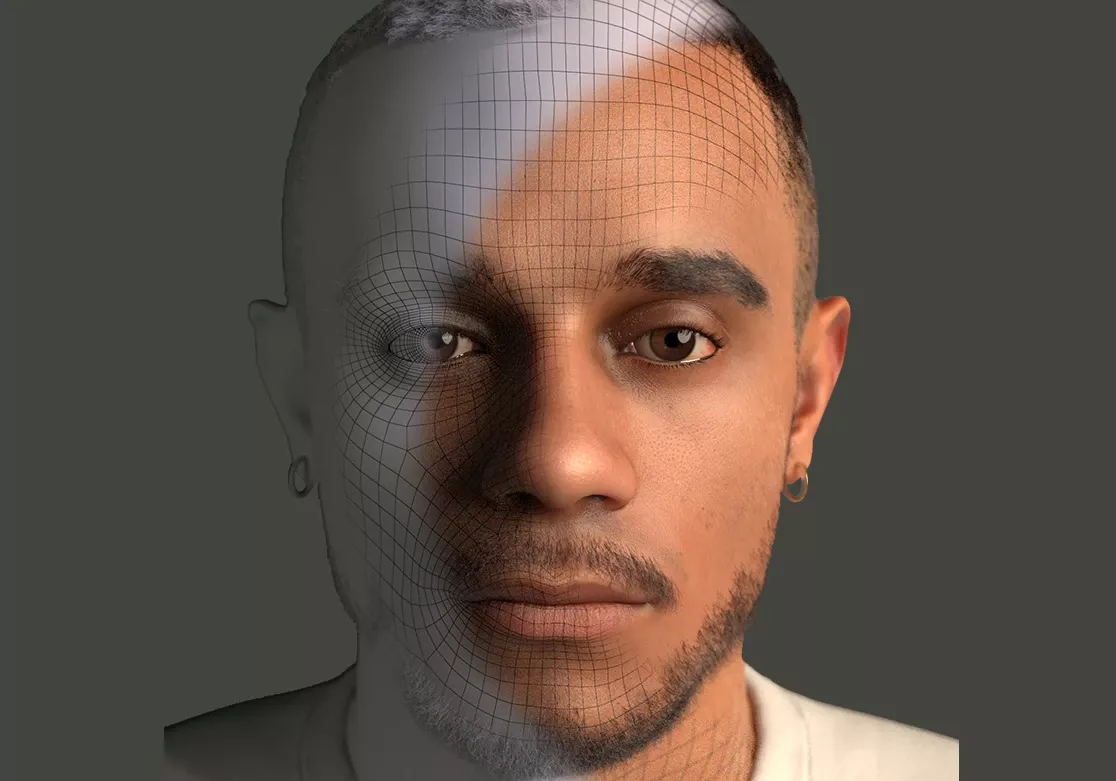
| 3D scan | Body and face |
|---|---|
| Modeling | High resolution, then retopology, UVs and textures |
| Grooming | Hair and body hair |
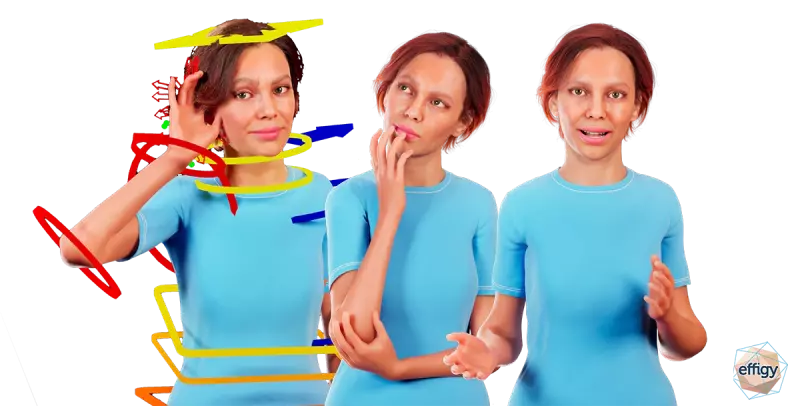
| Animation | Rigging, skinning and blendshapes from scans of real expressions |
Interactive 3D modeling example
Frequently asked questions
What can be scanned?
Objects of all sizes, environments and people, full body or face only.
What technology do you use?
Flash photogrammetry, with a rig of 60 DSLR-grade cameras triggered together, and in some cases laser LiDAR scanners depending on the subject.
What do we receive as a deliverable?
A textured 3D model, refined by our artists: digital sculpting, retopology, texture optimization and, for people, hair grooming. Depending on your needs, it is ready for animation, real-time 3D virtual production, pre-rendered imagery or 3D printing...
Can you scan on location?
Yes. The photogrammetry rig can be transported on location, in France or abroad. Our other methods can also be used on location.
How does this relate to Gaussian Splatting?
Our scans also serve as a basis for generating Gaussian Splatting scenes; for example, we scanned several models from the Pucci show in Portofino to create a film (The New Face agency). For animated (“dynamic”) 3DGS, see our 4DGS department.
What is the difference between a photorealistic and a stylized avatar?
A photorealistic avatar is a faithful digital double of a real person (actor, athlete, celebrity). A stylized avatar is a “cartoon” or anthropomorphic version of the person (this requires more work from 3D artists).
How do you create a person's digital double?
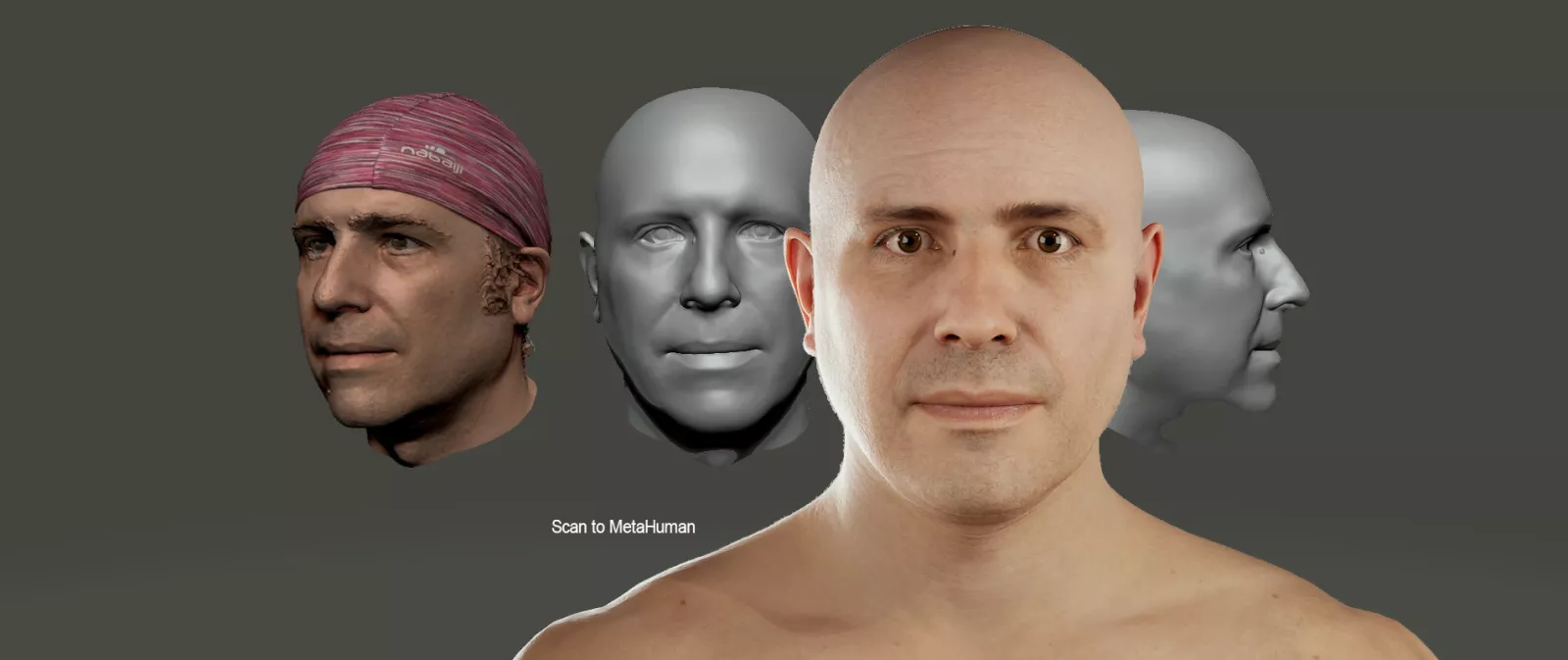
3D scan of the body and face, high-resolution modeling, retopology, UVs and textures, hair grooming, then rigging, skinning and, in the most advanced cases, blendshapes created from scans of around fifty real facial expressions.
Can the avatar be used in Unreal or Unity?
Yes. Avatars are delivered ready to animate and can be optimized for real time, virtual reality and augmented reality, or for display on glasses-free 3D monitors.
Can it be animated with motion capture?
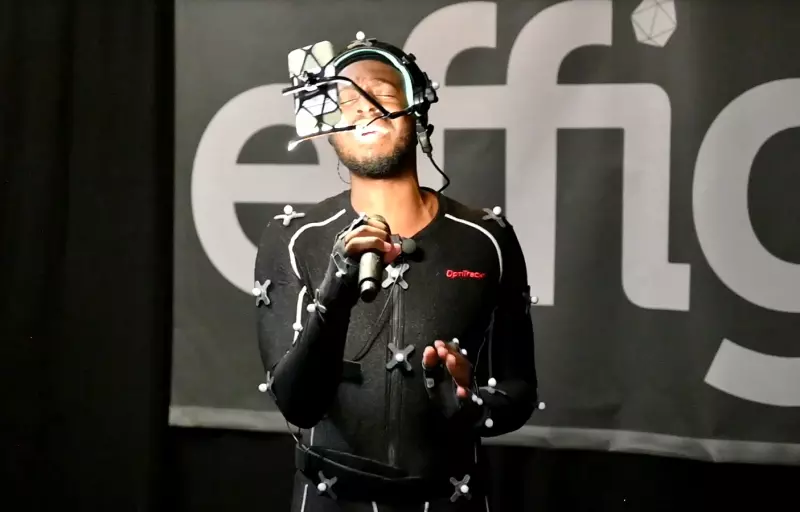
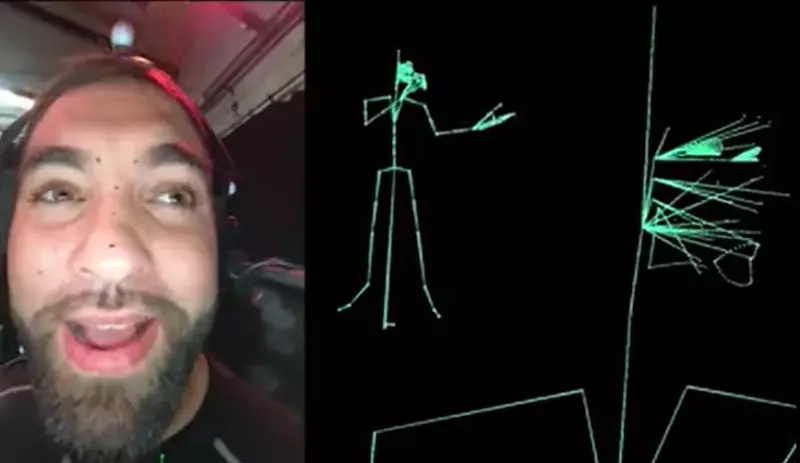
Yes, it is the best way to match the physical appearance with the person's own body language, and to get an avatar that is realistic in its behavior too. Our motion capture stage is at the same address: it is the ideal place to digitize both body and movement when creating an avatar, needing the person for only half a day for all these steps.
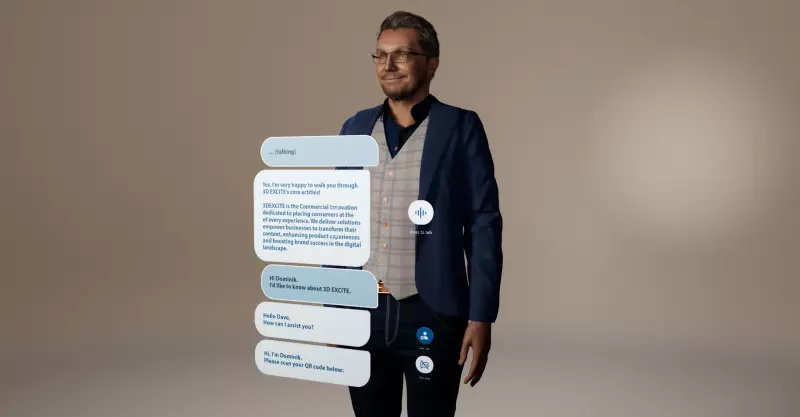
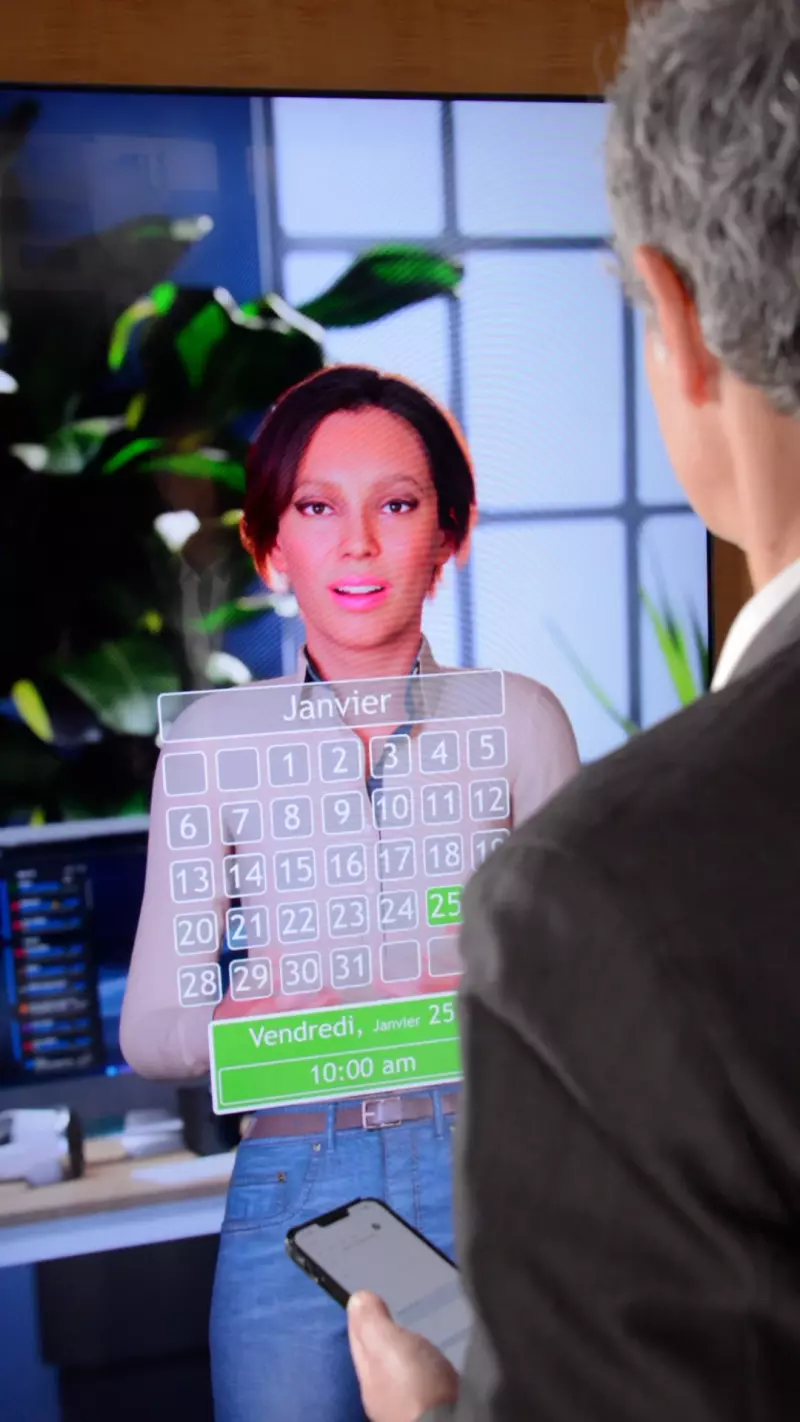
Can the avatar become a conversational assistant?
Yes. Connected to an LLM, we turn it into a conversational AI avatar that listens, connects to AI services through APIs and answers in real time. See our AI avatars offer.